
Most founders think a stalled sales pipeline comes down to price, the pitch, or bad timing. Usually it’s just the silence.
Here’s what actually happens. A prospect sits through your call, nods along, asks smart questions, and says they need to think it over. You assume that’s about budget or timing. What really happened, most of the time, is they went home and checked you out on LinkedIn and your blog. If the last real post they found was months old, that gap alone can plant a doubt that has nothing to do with your pricing.
Nobody tells you this happens, and there’s no notification for it. You just feel the deal go quiet and assume it was something you said.
What people are actually checking for
They’re not checking for perfection. Say your last three posts weren’t your best work, that’s not what kills trust. What kills it is finding nothing, a blog that stopped in March, a LinkedIn feed that’s mostly other people’s posts reshared with no comment. To someone with no other way to check, that reads as a company that’s lost momentum, even when the real story is the opposite: a founder buried in client work with no time left for the parts nobody sees. Once someone feels that doubt, they don’t say it out loud, they just get quieter on their end too.
I’ve seen this hit the founders who deserve it least. The ones with real expertise, the kind who could out-think most of their competition in an actual room, lose the deal anyway. That’s because nobody outside their existing clients ever sees that thinking. The expertise was real, it just wasn’t visible to the one person deciding whether to trust it with real money.
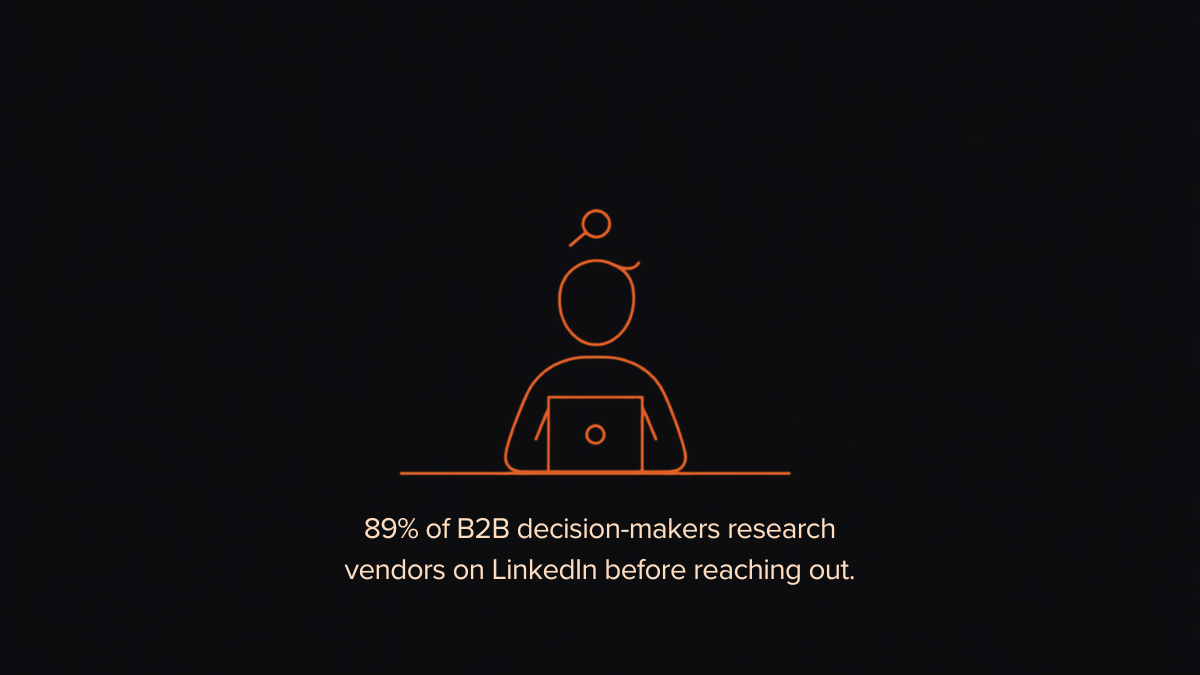
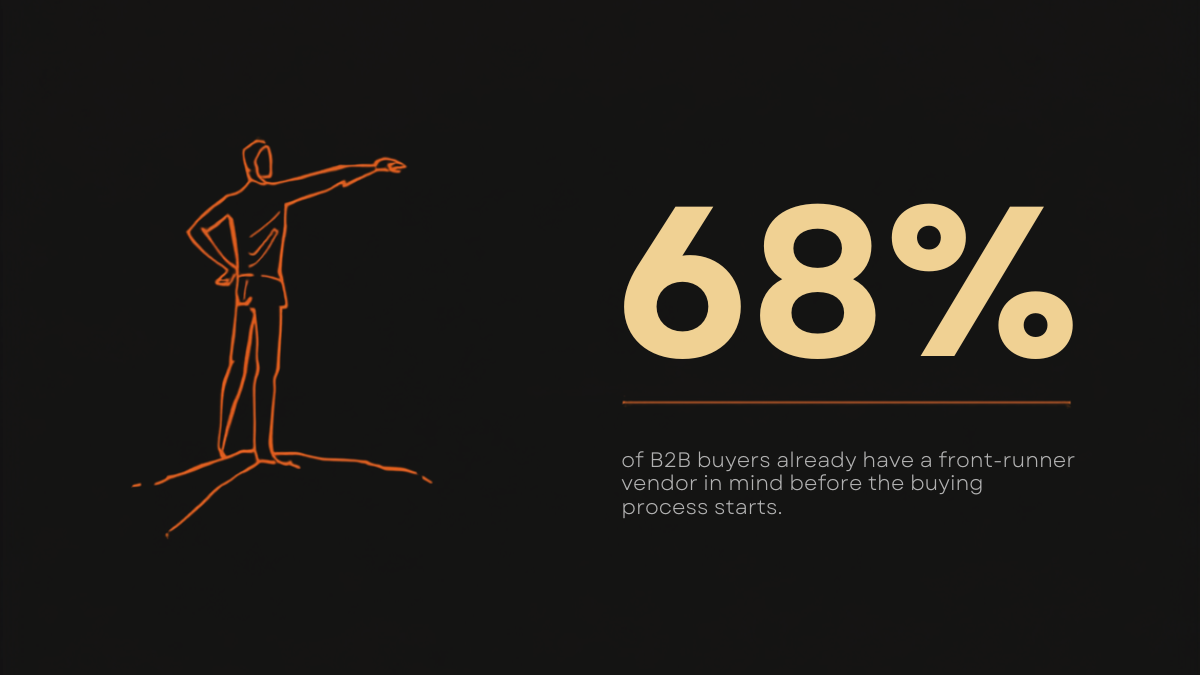
This isn’t just a feeling I have from sitting in on enough calls. LinkedIn’s 2024 B2B Buyer Report found that 89% of B2B decision-makers use the platform during vendor research, and most of them do the bulk of that research before ever reaching out directly. Separate research from Forrester found that 68% of B2B buyers already have a front-runner vendor in mind right at the start of their buying process, and that front-runner ends up winning the deal 80% of the time. So whatever a prospect finds when they look you up isn’t a nice-to-have, it’s most likely confirming a decision they’ve already started making.
Why founders go quiet in the first place
I used to think this came down to discipline, but I don’t believe that anymore.
I’ve watched genuinely sharp operators stop publishing within two months of starting, and it’s rarely because they ran out of things to say. It’s because the moment their calendar fills up with actual client work, content is the first thing that gets cut. Nobody loses a client over a skipped LinkedIn post this week, so it always loses that trade-off against whatever’s actually on fire.
I’ve lived this myself, trying to run a business doing everything on my own, content included, and watching it get dropped every single time something more urgent showed up. What I offer now is built directly from what that looked like, and what actually fixed it.
What doesn’t work, and what I do instead
I don’t believe in writing a blog post and pasting the raw link into LinkedIn or Instagram with a sentence of commentary on top. It goes out, gets a handful of likes from people who already knew you, and quietly dies. That’s not a content problem, it’s a format problem. LinkedIn doesn’t want to send people off LinkedIn, and Instagram has no real use for a link at all. Every platform wants to be spoken to in its own language, and a blog post copied elsewhere just isn’t that.
What I do instead is take the parts that actually eat a founder’s time and take them off their plate. One conversation a month, thirty minutes, where the founder just talks the way they’d talk to a friend over coffee. From that single conversation, my team and I build the full month. That means the long-form piece, the LinkedIn essay, the Instagram and Facebook carousel, and the newsletter. Same idea, rebuilt natively for each place, not chopped up and reused.
I don’t offer a version of this where the founder has to keep writing every week themselves. That’s the whole point.
If you want to fix this yourself first
You don’t need a full system to close this gap by next week. A few things move the needle immediately, even done manually.
Audit every channel today, not eventually. Open your blog, your LinkedIn, and your Instagram, and actually check the date of your last real post on each one. Most founders guess at this instead of looking, and the real number is usually worse than they expect.
Pick one channel to anchor, not five. Trying to show up everywhere at once is how most founders burn out within a month. Choose the one place your actual buyers already look, usually LinkedIn or your blog, and get that one consistent before you spread out further.
Rebuild for each platform instead of copying the link. A blog post pasted into LinkedIn with one sentence of commentary gets buried by the algorithm, since LinkedIn doesn’t want to send people away from LinkedIn. Budget fifteen minutes to actually rewrite the idea for whichever platform it’s landing on.
Set a cadence you can actually protect, and make it smaller than you think you need. Two solid posts a month, published reliably, beats four a month for six weeks followed by a quarter of silence. Consistency is the entire point, so the safest cadence is whatever you can still defend during your busiest week.
Batch the raw material, not the finished writing. Block thirty minutes once a month to talk through what actually happened in your business, out loud, recorded if that helps. Write the finished posts from that later, in a separate sitting. Trying to think of the idea and polish the writing in the same sitting is where most founders stall out.
Do those five things consistently and the next prospect who looks you up finds evidence you’re still here, still thinking, still doing the work, instead of silence they have to fill in themselves. The system I build for clients just takes the labor out of doing it every single month.
What actually changes
You know your business is fine, the work is good, the clients are happy, and the expertise is real. What’s missing is just the visible, ongoing proof of that, sitting in the places a prospect checks before they ever say yes.
If you already know, without checking, that your last post was months ago, you don’t have a writing problem. You have a visibility gap, and the next person who checks won’t tell you what they found.